at the subway
beggar pleads each commuter,
never loses hope
au métro
mendiant plaide chaque passager
ne perd jamais espoir
~
autumn gusts rip
through a day`s hard labour,
spider spins anew
© Tournesol’14
Poetry ~ Waka

at the subway
beggar pleads each commuter,
never loses hope
au métro
mendiant plaide chaque passager
ne perd jamais espoir
~
autumn gusts rip
through a day`s hard labour,
spider spins anew
© Tournesol’14
takes his cue on stage,
audience murmurs solemnly
Serenity Prayer
~
beggar mutters
daily mantra um-teem times
holding out his cup
© Tournesol ’14
Thinking of my friend this week…
her sobs echo
across the Atlantic
a long journey
Caspian Sea and
Arabian Gulf imbibe
salty tears
the skies rumble
iridescent light,
safe passage
pain free at last
an angel stands by, waiting
in white light
heavens whisper
the last chapter,
Rumi stirs
© Tournesol ‘14
*******************************
Don’t run away from grief , o soul
Look for the remedy inside the pain.
because the rose came from the thorn
and the ruby came from a stone.
© Rumi


We seem to be in the spirit of death, being in the middle of autumn, approaching Halloween and all Saint`s Day November 1st; we also call this month in French, le mois des morts (month of the dead). November 11th, being rememberance day where we pay tribute to all the soldiers who gave their lives for their country and for world peace. And so I continue on remembering another great man…my grandfather, when he died in his home, Princess, his old mongrel (spaniel mix) went down to the basement and howled grieving for her master. She stayed there for a week in mourning.
la mort d’un grand homme – Grandpapa
pinson est muet
dernier souffle du maître,
vieux chien hurle
death of a great man – Grandfather
blue-finch falls silent
master’s last breath,
old dog howls
© Tournesol ’14

Our host at Carpe Diem’s prompt is “A Departed Soul”. Many of the great masters of haiku wrote “death poems” about their own deaths. One of the “big five” who delivered haiku, Shiki wrote this on his deathbed:
sponge gourd has bloomed
choked by phlegm
a departed soul
© Shiki
having gazed at the moon
I depart from this life
with a blessing
© Basho
and our host writes:
morning dew
evaporates in the early sunlight
spirit climbs to the sky
@ Chevreuille
~~~~~~~~~~~~~~~~~~~~~~~~~~~~~~~~~~
crossing (haibun)
I love our host’s haiku because it reminds me of my GrandPapa who passed June 17th during the day. I don’t remember if it was morning but the “morning dew” makes me think of the river where we were brought up and where my grandfather died in his home.
The dove is often represented in “death” but its significance is more personal to me. In French the translation for “dove” is Colombe which is my mother’s name.
I love daisies. I feel connected to this flower as the petals represent the multiplicity of my personality. The layer of petals beneath the top layer are facets to be discovered throughout a lifetime. I remember, when working in homecare, how sad I would feel when a client passed. Weeks and months caring for a person in their homes was humbling for them and such a loss when they died. After a few years, I wrote to my supervisor that I could no longer continue working in this department for each person who died, I felt a petal from the daisy fall. If I continue, what will be left of me?
Here is my attempt in writing a haiku with this tone of “death poems”:

on the river
a petal floats
crossing over
~
river breeze
wings of a dove
whoosh
© Tournesol’14
This was my response to this prompt when originally posted in July 2014 “Departed Soul (haibun)


dam released
roaring river waters
white mist sprays
© Tournesol ’14
freedom at last
hot summer night
skinny dipping
~
blue mist
ocean fog rolling in,
flippers splash
© Tournesol ’14
This was my response at the first prompt in June ’14 “By the River”


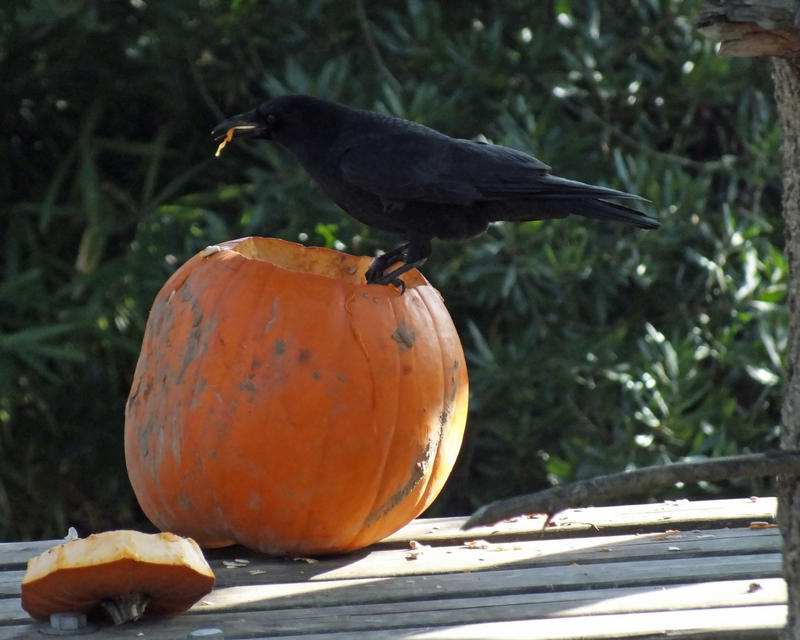
gut Mister Pumpkins
designing Jack-O-Lanterns
crow burps a seed
© Tournesol ’14

If my grandmother would have been born within the Aboriginal culture, for sure she would have been a wise elder and perhaps a Shaman. But she was a humble woman living by la rivière Yamaska; a village healer in many ways being a mid-wife, a go-to person if someone was sick from newborn to elderly. She had herbal remedies and others passed down to her from her mother and an old village doctor.
To this day, I still miss her when I am sick. For some reason her hand on my forehead and her homemade chicken broth comforted me. She spent hours and days with mothers in labour, sat by a dying person’s bed many late nights and even doctors called on her for help. Most people called called her Garde Daudelin OR GrandMaman.
..
At Carpe Diem our host tells us about a Mongolian shaman named Batbayar. A beautiful story you can read more here of a Shaman and his apprentice. Our host wrote this in honour of the passing of this shaman.
..
whispering leaves
telling all wisdom of the steppes
cry of an eagle © Chèvrefeuille
..
To make this interesting for me, I searched where there were ealgles in Québec. In Northern and Eastern Québec there are many surprisingly, golden eagles. In the Gaspé Penninsula, residents are helping researchers with sightings as they are very proud of the eagle in their territory. (Gaspé is where Kerouac’s parents were from).
.
I have heard from aboriginal youths that the Northern Lights are their ancestors from the “other side”, spirits revealing they are well.
.

golden eagle cries
shaman’s loss mourned over
lac Natashquan
© Tournesol ’14

spirits announce
shaman’s safe entrance
aurora borealis
© Tournesol ‘14
Carpe Diem Haiku Kai “Helpful”*
 Tournesol dans un Jardin