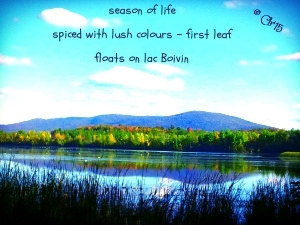
lumière de la pleine lune (haiku)

Autumn Moon -Chèvrefeuille

We asked  to write a haiku inspried by our host’s haiku as well as the theme autumn.

light of the full moon
shines through colored leaves
at last … autumn

© Chèvrefeuille

la lumière de la pleine lune
brille à travers les feuilles colorées
enfin … l’automne
© Chèvrefeuille (traduit)

Summer vacation puts close friends and lovers at a distance sometimes;  some have summer jobs far from their loved ones or distant summer homes.  Autumn can be a blessing for many…

claire de la lune
flamme de son cœur fébrile
enfin…l’automne

enfin…l’automne
retrouvailles d’amoureux
retour au collège

retour au collège
lueur de la pleine lune
brille sur son visage

brille sur son visage
joues rougissantes la trahissent
yeux pétillants sollicitent

© Tournesol ’15

autumn’s bliss (haibun)

© Clr’14 taken first week of October – a stranger accepted to be photographed on this glorious day!

Shivering in the cool air shortly after dawn, you can see her breath in smoke signals as she walks quickly to stay warm. Lunchtime has a change of heart…

midday radiance
greets a summer’s breeze –
season’s treat
fall’s tucked up on a shelf
dead leaves shed their tell-tale scents

© Tournesol ’15

Heeding Haiku with Chèvrefeuille at MindLoveMiserysMenagerie

autumn wind (tan renga)

© Clr ’14

howling wind —
an autumn note within
the bamboo flute (Kala Ramesh)

rustling leaves prepare to fall
whistling wind turns into shrills

trembling twigs
awaiting emptiness
their naked fate

© Tournesol ’15

flocon de neige (haiga)

tablet-win_20141116_092522-2[1]

au revoir feuillage
repose bien verdure
accueillant l’hiver

l’arrivé du froid
le charme des glaçons bijoux
flocons émerveillent

****

farewell foliage
rest well verdure
welcome winter

advent of cold
magic of icicle gems
snowflake enchantments

(c) Tournesol ’14

Carpe Diem “Exodus”

Golden glow (tan renga)

mystic purple flames
arise from the spirit’s stalks
chill my autumn heart © Panchali

bringing offerings to the gods
grateful for pointing the way (Chèvrefeuille)

mystic purple flames
arise from the spirit’s stalks
chill my autumn heart © Panchali

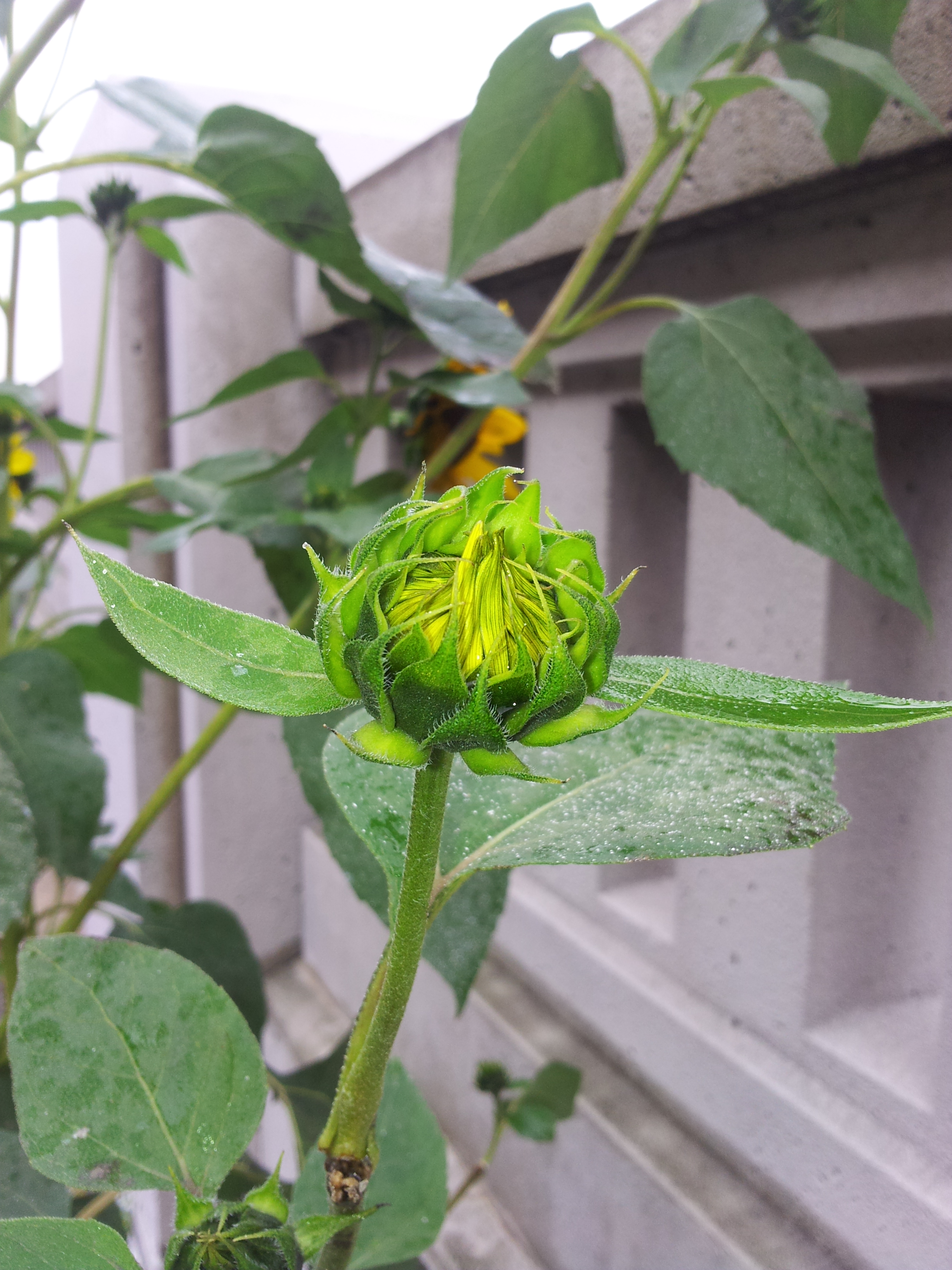
sunflower with golden glow
spreads a hint of warmth

blowing hope
through barren trees
whispers thanks in gusts

© Tournesol ‘14

Carpe Diem Tan Renga Challenge

I decided to add a haiku underlining American Thanksgiving.

Climat d’automne (haiga)

© Clr '14 fleuve St-Laurent
© Clr ’14 fleuve St-Laurent


autumn gusts
shudder ripples
on the river

~

rafales d’automne
frémissent des risées
sur le fleuve

20141016_135116_Android 1_2
© Clr ’14 November

seasonal rains
turn muddy paths into
frozen puddles

~
heading home last night
my cane slips on a patch,
leaves had turned to mulch

© Tournesol ’14

Carpe Diem Ghost Writer #33, Richard Wright on Autumn by Jen of Blog It Or Lose It

moon salute (haiga)

Carpe Diem Special Thomas Transtromer

Oak trees and the moon.
Light and mute constellations.
And the frigid sea

© Tomas Tranströmer

© Clr November 2014
© Clr November 2013 to the East

 These two shots were taken on my way to my mother’s place last November. I stopped my car on the highway to take a shot on my left, this is the moon and on my right the sun was setting in splendour…cold evening but stayed out long enough to get a few shots.

Early moon rise
salutes shimmering star 
through naked trees

© Tournesol ’14

© Clr November 2013
© Clr Novmber 2013 to the West

A slight change to place “through” at the last line. Thank you, Kristjaan:) It flows smoothly.

hanging on (haiga)

© Clr 2014
© Clr 2014

tournesol

accrochant à la vie

enjoué

 ~

sunflower

hanging on to life

beaming

© Tournesol ’14

pressed leaves (haiku)

squirreling away,
losing layers of colours
still, beauty in loss

spared none
leaves have all fallen
pressed in Basho

Basho holds
whiffs of dried leaves
varied colours

© Tournesol ’14

[“Matsuo Basho (松尾 芭蕉, 1644–1694), born 松尾 金作, then Matsuo Chūemon Munefusa (松尾 忠右衛門 宗房),[2][3] was the most famous poet of the Edo period in Japan. During his lifetime, Bashō was recognized for his works in the collaborative haikai no renga form; today, after centuries of commentary, he is recognized as the greatest master of haiku (then called hokku).”] Read more here